


By using our website, you agree to the use of cookies as described in our Cookie Policy
Should You File for Bankruptcy in the Bronx or Try Debt Settlement?
Debt doesn't care where you live. But the Bronx has its own rhythm when it comes to financial pressure — high rent, unpredictable income, medical bills that pile up faster than you can open the envelopes. We've seen plenty of people stuck between two bad-sounding options: bankruptcy or debt settlement. Neither feels like a win. But one might be the right move, depending on what you owe, what you earn, and what you're willing to lose.
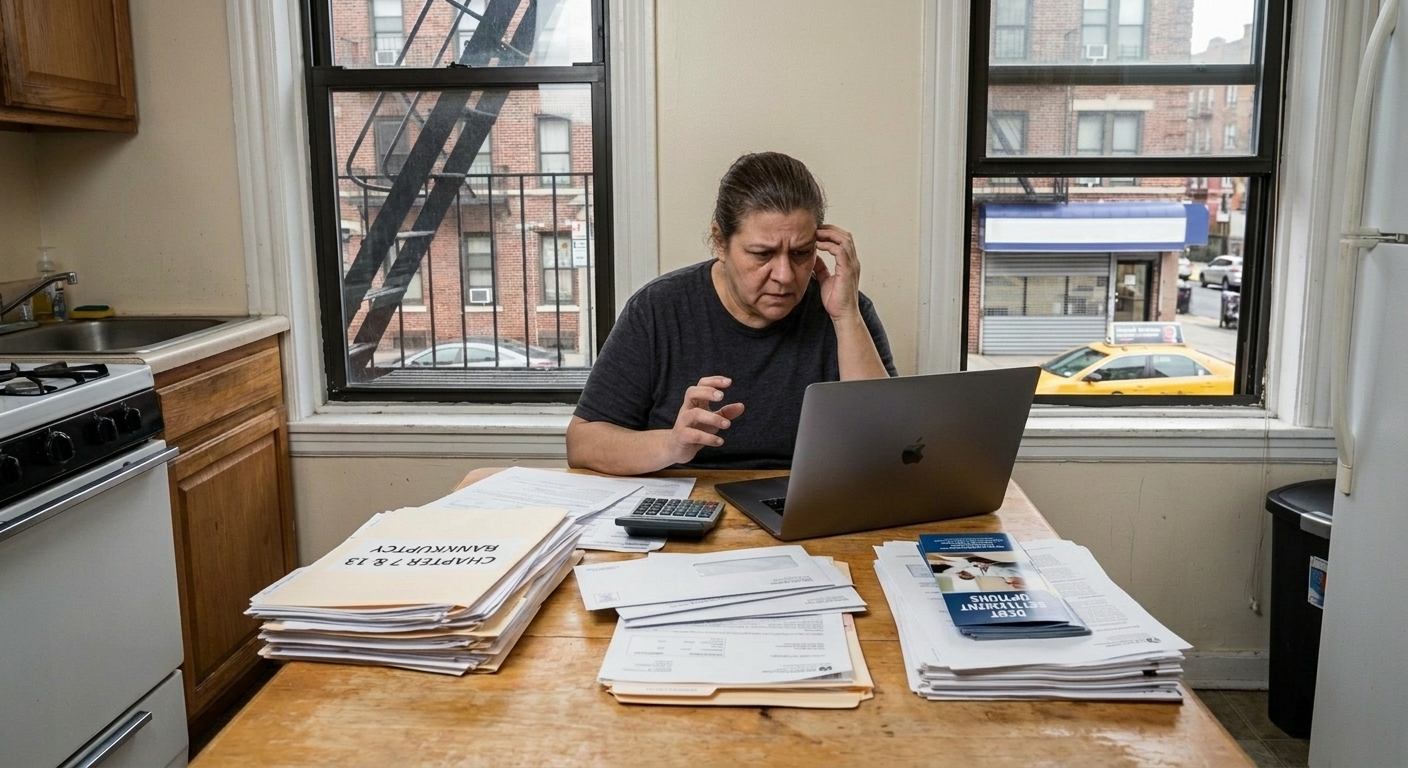
The IRS and the courts don't treat these paths the same way. One wipes the slate through legal process. The other tries to negotiate your way out with less damage. Both leave marks. Both require documentation. And both demand that you understand the trade-offs before you commit.
What Bankruptcy Actually Does
Bankruptcy isn't just admitting defeat — it's a federal tool designed to give you breathing room when creditors won't stop calling. Chapter 7 and Chapter 13 are the two routes most individuals take, and they work very differently.
Chapter 7 liquidates what you can't protect and discharges most unsecured debt. Credit cards, medical bills, personal loans — gone. New York exemptions let you keep essentials like your car, basic household goods, and sometimes equity in your home. Chapter 13 sets up a repayment plan over three to five years. You keep your assets, but you're on a court-approved budget. Miss payments, and the protection disappears.
- Chapter 7 discharges unsecured debt fast, usually within months
- Chapter 13 restructures what you owe into manageable payments
- Both stop collections immediately through an automatic stay
- Both tank your credit score for years
- Both become public record
How Debt Settlement Works
Debt settlement skips the courtroom. You stop paying creditors and start stashing cash in a separate account. Once you've saved enough, you or a settlement company offers a lump sum to close the debt for less than what's owed. Creditors aren't required to accept. Some will. Some won't. Some will sue you while you're saving up.
There's no legal shield here. Collections continue. Interest keeps accruing. And if a creditor forgives part of your debt, the IRS may count that forgiveness as taxable income. We've seen people settle $20,000 in credit card debt only to owe $5,000 in taxes they didn't plan for.
- You negotiate directly or hire a company to do it
- Creditors can refuse and pursue legal action
- Forgiven amounts may trigger tax liability
- Your credit takes a hit, though potentially less severe than bankruptcy
- No automatic protection from lawsuits or wage garnishment
The Credit Damage Isn't Equal
Bankruptcy stays on your credit report for seven to ten years depending on the chapter. Debt settlement shows up as "settled for less than owed," which lenders don't love either. Both hurt. But bankruptcy is a neon sign. Settlement is more like a footnote with consequences.
If you're planning to buy a home, lease a car, or apply for business credit in the next few years, bankruptcy makes that harder. Settlement might too, but the timeline is shorter and the stigma slightly less. Either way, expect higher interest rates and smaller credit limits for a while. Many people also benefit from credit repair services to rebuild their financial standing after either process.
- Chapter 7 bankruptcy remains visible for ten years
- Chapter 13 drops off after seven
- Settled accounts stay on your report for seven years from the original delinquency date
- Both lower your score significantly in the short term
- Rebuilding credit is possible with either, but takes discipline
When Bankruptcy Makes More Sense
If your debt is massive and your income can't cover it, bankruptcy might be the only realistic exit. Chapter 7 works best when you have little to lose and need a clean break. Chapter 13 fits if you're employed, want to keep your home or car, and can commit to a payment plan.
Bankruptcy also gives you immediate legal protection. The automatic stay halts collections, lawsuits, wage garnishments, and foreclosure proceedings the moment you file. That's leverage you don't get with settlement. And once the discharge comes through, those debts are gone — no tax bill, no lingering negotiations.
- You owe more than you can realistically repay
- Creditors are already suing or garnishing wages
- You need legal protection right now
- You qualify under the means test for Chapter 7
- You want finality, not ongoing negotiation
When Settlement Might Be Worth the Risk
Settlement works better when your debt is moderate, you have some cash to negotiate with, and you're willing to gamble on creditor cooperation. It's not a guarantee. But if you can settle three or four accounts for fifty cents on the dollar, you might come out ahead without the public record of bankruptcy.
The downside is the lack of control. Creditors can say no. They can sue. And while you're saving up, your credit is still tanking. If you're already behind and collections are aggressive, settlement might just delay the inevitable. But if you're strategic and have a lump sum ready, it can close accounts faster than a repayment plan. Understanding protection from creditor harassment can also help you navigate aggressive collection tactics during this process.
- Your total debt is under $50,000
- You have access to a lump sum or can save one quickly
- Creditors haven't filed lawsuits yet
- You want to avoid the public record of bankruptcy
- You're prepared for potential tax consequences on forgiven debt
Don't Wing This Without Help
We've seen too many people try to handle this alone and end up worse off. Bankruptcy has strict filing requirements, exemption rules, and means tests. Settlement requires negotiation skills and an understanding of tax law. Both need documentation — loan agreements, payment histories, proof of hardship.
A bankruptcy attorney can walk you through exemptions, help you choose the right chapter, and file everything correctly. A credit counselor or settlement specialist can assess whether negotiation is even viable. Either way, you need someone who knows the Bronx courts, the local creditors, and how to protect what you've got left. Professional financial education and counseling can provide the guidance needed to make informed decisions about your financial future.
The Path Forward Depends on What You're Protecting
Choosing between bankruptcy and settlement isn't about pride. It's about math, timing, and what you can afford to lose. Bankruptcy offers certainty and legal protection. Settlement offers flexibility and potentially less public exposure. Both require you to face the numbers head-on and commit to a plan.
We help people in the Bronx navigate these decisions every day. Not with generic advice, but with a clear-eyed look at what they owe, what they earn, and what their options actually are. If you're drowning in debt and don't know which way to turn, start by talking to someone who understands both the law and the stakes. The worst move is doing nothing and hoping it goes away. It won't.
Let’s Take the Next Step Together
Facing tough financial choices is never easy, but you don’t have to do it alone. We’re here to help you weigh your options and find the best path forward for your unique situation. If you’re ready to get real answers and a plan that fits your life, call us at 718-819-1728 or schedule a free consultation today. Let’s work together to put your debt behind you and reclaim your peace of mind.
‹ Back
Recent Posts
-
Sponsoring a Family Member for Immigration from the Bronx
September 10, 2026
-
Do You Need a Lawyer to File a Will in the Bronx?
August 20, 2026
-

Getting Divorced in the Bronx While Living Together
August 13, 2026
-
-