



By using our website, you agree to the use of cookies as described in our Cookie Policy
What Should You Do After a Car Accident in the Bronx?
Most drivers treat accidents like they're one-off disasters. Something that happens to someone else. But in the Bronx — where intersections stack up, delivery trucks double-park, and yellow cabs cut lanes like it's a sport — you're playing the odds every time you merge. So when metal meets metal, what you do in the next ten minutes matters more than what happened in the last ten seconds.
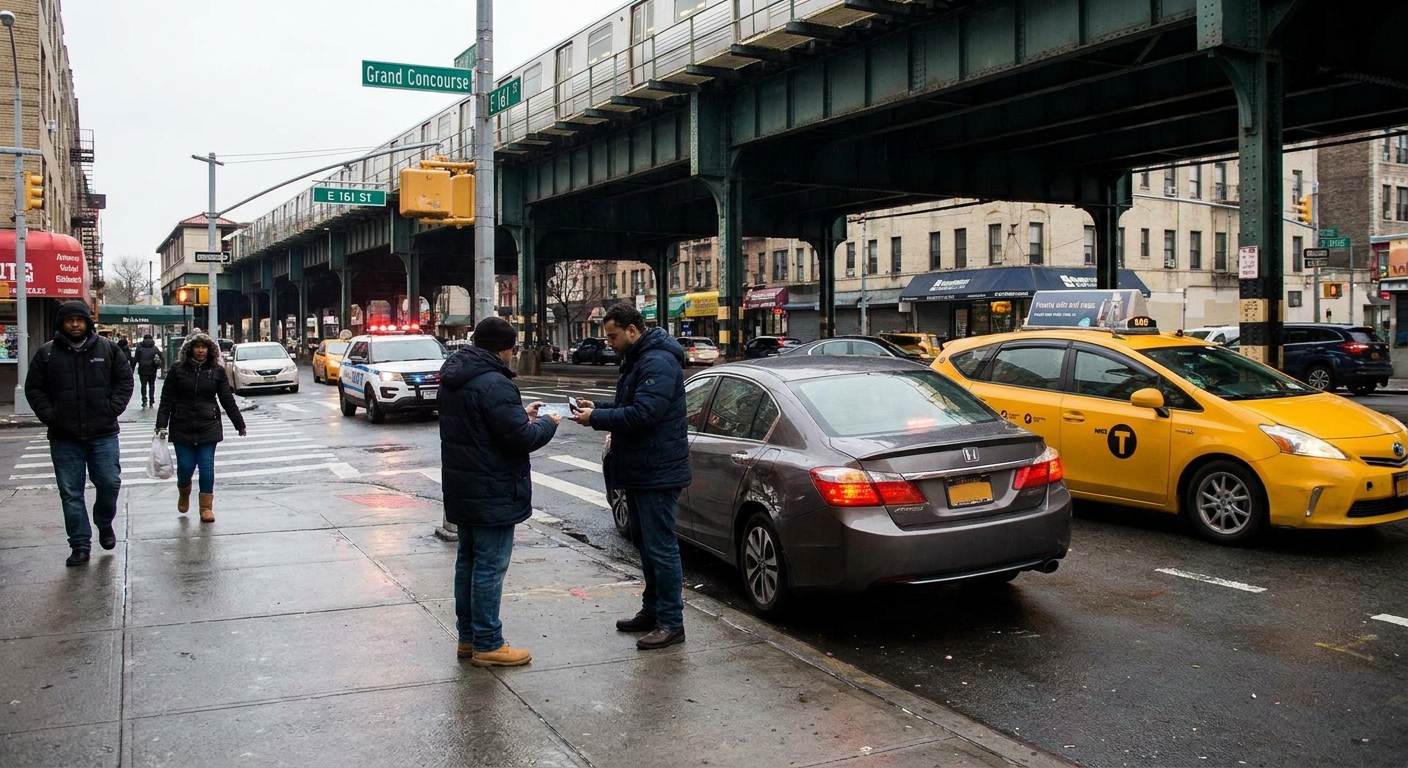
The scene is chaotic. Adrenaline kicks in. You might not feel pain yet. You might not even realize your bumper's half-gone. But the clock's already ticking on your insurance claim, your medical coverage, and your legal options. Move fast. Think clearly. And don't assume the other driver's going to do the right thing — because most don't.
Get Out of the Lane Before You Get Hit Again
If your car still moves, get it off the road. Pull into a parking lot, a side street, anything that isn't live traffic. Hit your hazards. The last thing you need is a second collision because someone wasn't paying attention. If the vehicle's totaled and you're stuck in the middle of the Grand Concourse, stay buckled and wait for help. Don't step into traffic unless you're in immediate danger.
Safety isn't about being polite. It's about survival. Every second you spend in an active lane is a second someone else could rear-end the wreck — and you.
Check Everyone Before You Check the Damage
Forget the bumper for now. Look at yourself. Look at your passengers. Ask the other driver if they're hurt. Even if everyone says they're fine, call 911 anyway. Concussions don't announce themselves. Neither does internal bleeding. You might feel okay now and wake up tomorrow unable to turn your neck.
Paramedics create a paper trail. That matters later when your insurance adjuster starts asking questions or when you're sitting in a lawyer's office three weeks down the line trying to prove you were injured. No medical response at the scene? Good luck making that case stick.
The Police Report Is Your Best Witness
New York law says you call the cops if there's injury, death, or damage over a grand. In the Bronx, that's basically every fender bender that isn't a love tap. The officer writes up what happened, takes statements, and files a report that both insurance companies will pull. That report becomes the foundation of your claim — or your defense.
When the officer asks what happened, stick to facts. Don't apologize. Don't speculate. And definitely don't say it was your fault just to smooth things over. Even if you think you messed up, let the investigation sort it out. What you say on the scene can be used against you later.
Swap Details Like Your Claim Depends on It
You need more than a first name and a promise to "work it out later." Get everything in writing — or better yet, in your phone. Here's the full list:
- Driver's full name and phone number
- License plate and state
- Insurance carrier and policy number
- Driver's license number
- Vehicle make, model, year, and color
If there's a passenger in the other car, grab their info too. If someone saw it happen, get their contact details. Witnesses disappear fast in the Bronx. Don't count on tracking them down a week later when your adjuster needs a statement.
Your Phone Is Your Evidence Vault
Start snapping photos. Wide shots of the scene. Close-ups of every dent, scrape, and shattered light. The street signs. The skid marks. The position of both vehicles. If your airbag deployed, photograph that too. If there's debris in the road, capture it. The more documentation you have, the harder it is for someone to spin a different story later.
Take video if you can. Walk around the scene narrating what you see. Note the time, the weather, the traffic flow. It sounds excessive until the other driver's lawyer tries to say you were speeding through a green light that was actually red.
Call Your Insurer Before the Day Ends
Don't wait a week to report the accident. Most policies require prompt notice, and delays can hurt your claim. Call your carrier, give them the facts, and send over your photos and the police report number. They'll open a file and tell you what happens next — whether that's getting an estimate, seeing a doctor, or waiting for the other side to admit fault.
Be straight with them. If you're not sure about something, say so. Guessing or exaggerating just creates problems when the details don't line up during the investigation.
See a Doctor Even If You Feel Fine
Adrenaline is a liar. It masks pain, dulls shock, and convinces you you're invincible. Then you wake up the next morning and can't lift your arm. Get checked out within 24 to 48 hours, even if you walked away without a scratch. A medical exam creates a record that ties your injury to the accident. Skip it, and your insurance company — or the other driver's — will argue your pain came from somewhere else.
This isn't paranoia. It's pattern recognition. Delayed treatment is one of the top reasons personal injury claims get denied or reduced. Don't give them the opening.
Keep Every Scrap of Paper
You'll need more than a few receipts to back up your case. Start a file — digital or physical — and load it with everything:
- The police report
- Medical records and bills
- Repair estimates and invoices
- Insurance correspondence
- Photos and video from the scene
If you miss work, document that too. Lost wages count. If you had to Uber everywhere because your car's in the shop, save those receipts. Every dollar tied to the accident is a dollar you might be able to recover — but only if you can prove it.
When the Other Side Pushes Back, Push Harder
Insurance companies don't hand out checks because you asked nicely. If you've been hurt, if your car's totaled, if the other driver was clearly at fault and their carrier's still dragging their feet — it's time to lawyer up. A car and truck accidents attorney knows how no-fault insurance works, what your PIP covers, and when it makes sense to file a lawsuit.
They also know how to negotiate. Adjusters lowball. Lawyers don't take it personally — they just counteroffer with evidence. That's the difference between settling for three grand and walking away with thirty.
Deadlines Aren't Suggestions
New York gives you 30 days to file a no-fault claim. Miss it, and your medical bills might not get covered. You've got three years to file a personal injury lawsuit, but waiting that long just makes your case harder to prove. Witnesses forget. Records get lost. Surveillance footage gets overwritten.
The smart move? Start the process as soon as the accident happens. Even if you're not sure you'll need a lawyer, a free consultation costs nothing and buys you clarity. By the time you realize you needed help, it might be too late to build a strong case.
Accidents Don't Wait for Permission
You can drive the same route every day for a decade and still get blindsided at a red light on a Tuesday morning. That's the Bronx. It's congested, it's unpredictable, and it doesn't care how careful you think you are. What separates those who recover from those who spiral into debt and legal limbo is simple — preparation and action.
Document everything. Follow through on medical care. Keep your insurer in the loop. And if the system pushes back, find someone who knows how to push harder. Experienced legal services can provide the guidance and representation you need when facing complex injury claims. This isn't about being litigious. It's about protecting yourself when the stakes are real and the other side has no incentive to play fair.
Let’s Take the Next Step Together
We know how overwhelming the aftermath of a car accident can feel, especially in the Bronx. Let’s make sure you’re not facing it alone. If you have questions or need help navigating your claim, give us a call at 718-819-1728. When you’re ready to move forward, schedule a free consultation and let’s work together to protect your rights and get you the support you deserve.
‹ Back
Recent Posts
-
Sponsoring a Family Member for Immigration from the Bronx
September 10, 2026
-
Do You Need a Lawyer to File a Will in the Bronx?
August 20, 2026
-
Getting Divorced in the Bronx While Living Together
August 13, 2026
-
-